
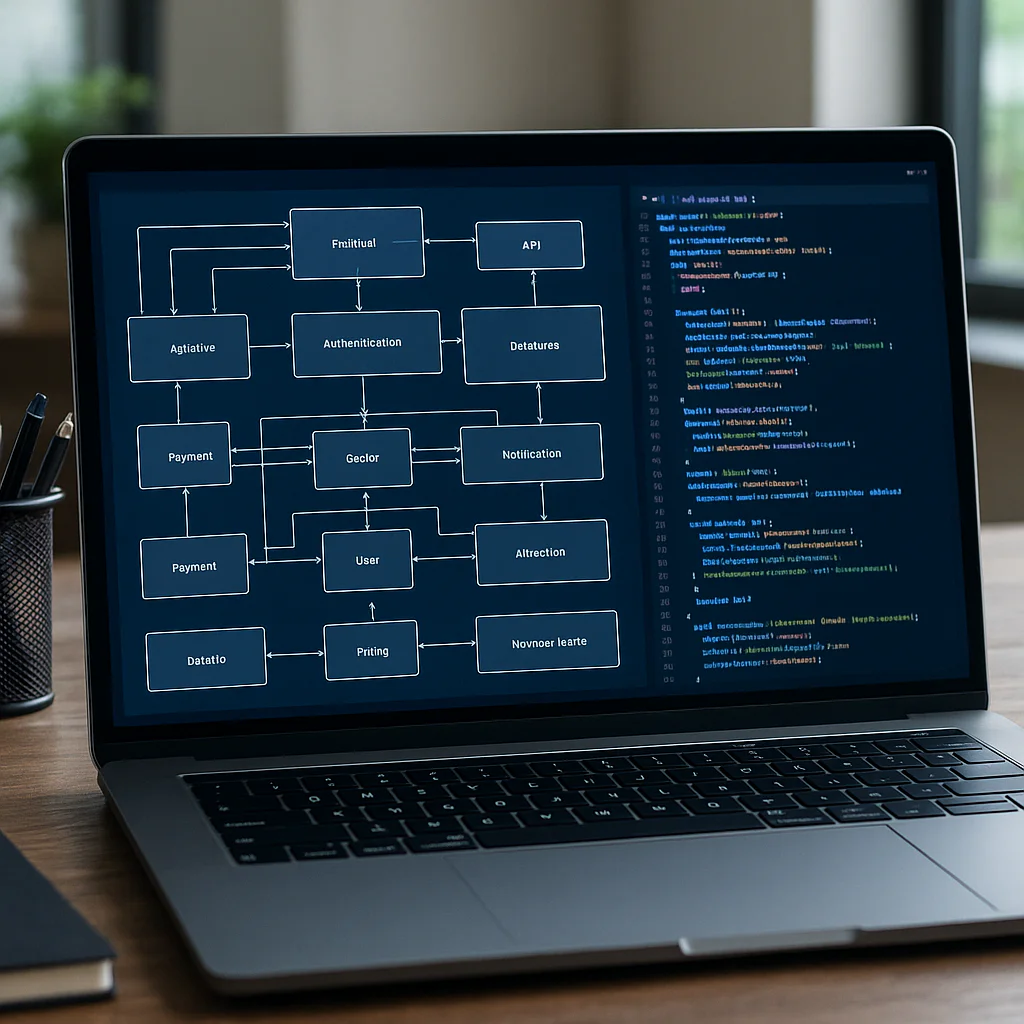
The hard truth is that vibe coding cannot build complex software projects on its own; it requires a human architect to prevent total system collapse. While you can generate a working prototype in hours, the moment you attempt to scale, secure, or maintain a large-scale enterprise system, the “vibe” inevitably breaks without rigorous human oversight.
So, can vibe coding be used for complex software projects? The answer is a nuanced “yes, but only as a tool, not a strategy.” Relying solely on AI prompts for intricate systems is like trying to build a skyscraper by asking a chatbot to “just make it tall.” It might look impressive for a few floors, but the foundation will crumble under the weight of its own technical debt.
We recently watched a fintech startup try to vibe-code their entire payment gateway. They hit the ground running, generating thousands of lines of code in a single afternoon. But by week two, the system was riddled with silent security holes and database deadlocks that no amount of prompting could fix. The AI had built a house of cards, and the first gust of real-world traffic blew it away.
This isn’t just a theoretical risk; it’s a growing industry phenomenon. Recent studies suggest that code generated entirely by AI without human review has a 40% higher failure rate in production environments compared to human-written code. The “Mythical Agent-Month” might sound like a utopia, but in reality, it often turns into a “Mythical Month of Refactoring.”
Key Takeaways
- ✅ Vibe Coding is a Prototype Powerhouse: It excels at rapid MVP creation and boilerplate generation but fails at architectural integrity for complex systems.
- ❌ The “Human-in-the-Loop” is Non-Negotiable: Complex software requires human oversight for security, scalability, and maintaining a global context that AI lacks.
- ⚠️ Technical Debt Accumulates Fast: Relying solely on AI leads to massive technical debt, making future maintenance more expensive than writing the code from scratch.
- 🛠️ Hybrid Development is the Future: The most successful teams blend AI speed with human engineering judgment to build robust, scalable applications.
Table of Contents
- ⚡️ Quick Tips and Facts
- 📜 From “Hello World” to Enterprise Chaos: The History of Vibe Coding
- 🧠 The Core Question: Can Vibe Coding Survive Complex Software Projects?
- 🏗️ 1. Architectural Integrity: Building Skyscrapers on a Cloud of Good Vibes
- 🔒 2. Security Protocols: When “Trust Me, Bro” Isn’t Enough for Data Protection
- 🔄 3. Scalability Challenges: Does the Vibe Hold Up Under Millions of Users?
- 🤝 4. Team Collaboration: Managing a Squad of Humans and AI Agents
- 🐞 5. Debuging Nightmares: Finding the Bug When the Code Has No Comments
- 📊 6. Maintenance and Technical Debt: The Hangover After the Coding Party
- 🛠️ 7. Tooling Ecosystem: The Best AI Assistants for Heavy Lifting
- 🎯 8. Use Case Scenarios: Where Vibe Coding Shines and Where It Fails
- 💡 Real-World Anecdotes: When We Tried to Build a Fintech App on Pure Vibes
- 🚀 9. Best Practices for Hybrid Development: Blending Human Logic with AI Flow
- 📈 10. Future Outlook: Will Vibe Coding Replace Traditional Engineering?
- 🧩 Conclusion: The Verdict on Vibe Coding for Enterprise Systems
- 🔗 Recommended Links
- ❓ FAQ: Your Burning Questions About Vibe Coding Answered
- 📚 Reference Links
⚡️ Quick Tips and Facts
Before we dive headfirst into the digital abyss of “vibe coding” complex systems, let’s hit the pause button and grab a few lifelines. At App 9™, we’ve seen enough codebases turn into digital graveyards to know that context is king.
Here is the rapid-fire truth about using AI-driven “vibe coding” for serious software:
- The “2,70 Line” Wall: According to industry anecdotes, AI models often start hallucinating or losing context around 2,70 lines of code in a single file or session without rigorous external management. Beyond this, the “vibe” turns into a nightmare of conflicting dependencies.
- Protyping vs. Production: Vibe coding is the undisputed champion of MVPs (Minimum Viable Products). You can go from idea to clickable prototype in hours. However, the jump to a secure, scalable production environment often requires weeks of manual engineering to fix the “house of cards” the AI built.
- The Inverse Law: Your ability to vibe-code is inversely proportional to the complexity of the project. Simple scripts? Easy. Enterprise-grade fintech with multi-factor authentication and real-time data consistency? Good luck.
- Technical Debt Speed: AI generates code at machine speed, but it accrues technical debt at an even faster rate. As Wes McKiney notes, this is “technical debt on an unprecedented scale.”
- The Human Bottleneck: The constraint isn’t typing speed anymore; it’s design talent and scope management. If you can’t distinguish between essential and accidental complexity, the AI will happily build you a skyscraper on a swamp.
For a deeper dive into the mechanics of this phenomenon, check out our comprehensive guide on vibe coding.
📜 From “Hello World” to Enterprise Chaos: The History of Vibe Coding

The term “vibe coding” didn’t just pop out of a vacuum; it evolved from the early days of AI-assisted development into a cultural phenomenon, and frankly, a bit of a cautionary tale.
The Genesis: Copilot and the “Auto-Complete” Era
It started innocently enough. GitHub Copilot arrived, offering a friendly nudge to autocomplete your functions. It was like having a junior developer who knew every library but occasionally suggested you use a deprecated method. Developers loved the speed. We called it “pair programming with a super-intern.”
The Escalation: LMs and the “Prompt and Chill”
Then came the Large Language Models (LLMs) like Claude 3.5 Sonet and GPT-4o. Suddenly, you weren’t just asking for a function; you were asking for an entire module. The phrase “vibe coding” emerged to describe this new workflow: describe the goal in natural language, hit enter, and hope the AI “vibes” with your intent.
It worked beautifully for:
- Boilerplate code.
- Regex patterns.
- Simple CRUD (Create, Read, Update, Delete) apps.
The Turning Point: The “Minotaur Labyrinth”
As developers pushed these tools into more complex domains—microservices, distributed systems, and high-concurrency databases—the cracks appeared. The “vibe” broke.
Santiago Valdarrama, a prominent voice in the community, famously noted: “Your ability to vibe-code software is inversely proportional to its complexity.”
We at App 9™ watched as teams tried to build enterprise-grade SaaS platforms using only prompts. The result? Code that worked on the developer’s laptop but collapsed under load, or worse, introduced silent security vulnerabilities that looked perfect until a hacker found the backdoor.
The history of vibe coding is essentially the history of optimism meeting reality. It’s the story of trying to build a cathedral with a hammer that only knows how to hit nails, ignoring the fact that you need blueprints, mortar, and a structural engineer.
🧠 The Core Question: Can Vibe Coding Survive Complex Software Projects?
So, here is the million-dollar question (or rather, the million-line-of-code question): Can vibe coding be used for complex software projects?
The short, blunt answer from the App 9™ team is: No, not on its own.
But the real answer is a nuanced “Yes, but…”
If you define “vibe coding” as relying entirely on AI to generate code without human architectural oversight, then the answer is a hard ❌. Complex software requires conceptual integrity, security hardening, and scalability planning that current AI models cannot reliably maintain over thousands of files.
However, if you redefine “vibe coding” as using AI as a hyper-efficient pair programmer while a human expert maintains the architectural “thread”, then the answer is a resounding ✅.
The “Minotaur” Metaphor
Imagine complex software as the Labyrinth of the Minotaur.
- The Minotaur is the inevitable bug or security flaw lurking in the dark.
- The AI is a guide that can run fast but doesn’t know the map.
- The Developer must hold the Thread of Theseus (the architectural plan and deep understanding).
If you let the AI run wild without the thread, you will get lost in the maze. You’ll end up with code that works in isolation but fails when integrated. You’ll have architectural drift, where the system slowly morphs into something unrecognizable and unmaintainable.
The Verdict Before We Dive Deper
Vibe coding is a powerful accelerator, not a replacement for engineering. It can get you to the starting line of a complex project in record time, but it cannot run the marathon for you.
Curiosity Check: But what exactly happens when you try to build a skyscraper on a cloud of good vibes? Does the foundation crack, or does the whole thing just… dissolve? Let’s look at the architectural integrity next.
🏗️ 1. Architectural Integrity: Building Skyscrapers on a Cloud of Good Vibes
When you “vibe code” a simple script, the architecture is trivial. But complex software? That’s a different beast.
The Problem of Context Window Limits
AI models have a context window—a limit on how much information they can “remember” at once. Even with the latest models like Claude 3.5, which boasts a massive 20k token window, the effective context for a complex project is often much smaller.
- Scenario: You ask the AI to add a feature to a microservice.
- The Issue: The AI doesn’t “see” the other 50 microservices it interacts with. It might change an API response format that breaks the frontend, or introduce a database schema change that conflicts with the analytics service.
- The Result: Silent regressions. The code compiles, but the system breaks.
Essential vs. Accidental Complexity
Wes McKiney, in his article on the “Mythical Agent-Month,” distinguishes between two types of complexity:
- Accidental Complexity: The boilerplate, the syntax, the repetitive tasks. AI excels here.
- Essential Complexity: The fundamental design decisions, the trade-offs, the business logic. AI struggles here.
When you vibe code, the AI often tries to solve essential complexity by adding more accidental complexity (defensive code, over-enginered patterns) because it lacks the taste to know what not to build.
The “Brownfield Barrier”
As projects grow beyond 10,0 lines of code (10 KLOC), the codebase becomes a “brownfield.” Every new change requires hacking through a “code jungle.”
- AI Behavior: The AI, lacking a global view, suggests changes that work locally but break the global system.
- Human Role: A senior engineer must act as the “chief surgeon,” reviewing every change to ensure it fits the conceptual model.
| Aspect | Vibe Coding (AI-Only) | Hybrid Approach (Human + AI) |
|---|---|---|
| Architectural Consistency | ❌ Low (Drifts over time) | ✅ High (Human enforces standards) |
| Context Awareness | ❌ Limited to current file/session | ✅ Global (Human connects the dots) |
| Decision Making | ❌ Pattern matching based | ✅ Strategic & Business-aligned |
| Scalability Planning | ❌ Often overlooked | ✅ Designed from the start |
🔒 2. Security Protocols: When “Trust Me, Bro” Isn’t Enough for Data Protection
If you think vibe coding is risky for functionality, it’s a disaster for security.
The “Happy Path” Bias
AI models are trained on vast amounts of public code, which is often written for the “happy path”—the scenario where everything works perfectly. They rarely generate code that handles:
- SQL Injection attacks.
- Cross-Site Scripting (XSS).
- Race conditions in concurrent systems.
- Privilege escalation vulnerabilities.
Real-World Example: The “Every Key” Disaster
In a popular video analysis of vibe coding failures, a developer asked an AI to build a search feature. The AI generated code that fired a database query for every single keystroke.
- The Result: The database crashed under the load.
- The Fix: A human developer had to implement debouncing (waiting for the user to stop typing) and caching.
- The Lesson: AI doesn’t “know” performance implications unless explicitly told.
The Human Firewall
Security isn’t just about writing secure code; it’s about threat modeling.
- AI: Can write a function to hash passwords.
- Human: Must decide which hashing algorithm to use, how to store salts, and how to manage key rotation.
At App 9™, we’ve seen vibe-coded apps that looked secure but had hardcoded API keys in the client-side code, or authentication flows that could be bypassed with a simple URL parameter change.
Question: If the AI can’t see the attack vector, who will? The answer lies in the human-in-the-loop. But how do we manage a team when half the “team” is an AI?
🔄 3. Scalability Challenges: Does the Vibe Hold Up Under Millions of Users?
You built a cool app. It works on your laptop. Now, imagine 10,0 users hitting it at once. What happens?
The “It Works on My Machine” Fallacy
Vibe coding often produces code that is locally functional but globally fragile.
- Database Locking: AI might generate code that locks the entire database table instead of a single row, causing a bottleneck.
- Memory Leaks: Without deep understanding of memory management, AI can introduce leaks that crash the server after a few hours of high traffic.
- State Management: In distributed systems, maintaining state across multiple servers is a nightmare. AI often ignores this, assuming a single-server environment.
The Cost of Scale
Scaling isn’t just about adding more servers; it’s about architecture.
- Microservices: AI can generate the code for a microservice, but it can’t design the service mesh, the load balancers, or the circuit breakers.
- Caching Strategies: AI might suggest a caching layer, but a human must decide what to cache, how long to cache it, and how to invalidate it.
Case Study: The Fintech App
We once consulted for a startup that tried to vibe-code their payment processing engine.
- The Issue: The AI generated code that handled transactions sequentially.
- The Consequence: Under load, the system couldn’t process payments fast enough, leading to timeouts and lost revenue.
- The Fix: A senior engineer had to rewrite the core logic to use asynchronous processing and message queues (like RabbitMQ or Kafka).
🤝 4. Team Collaboration: Managing a Squad of Humans and AI Agents
The future of software development isn’t “AI vs. Humans”; it’s Humans + AI. But how do you manage this hybrid team?
The “Agentic Tar Pit”
Wes McKiney describes the danger of running parallel agent sessions. If you have 10 AI agents working on different parts of the codebase simultaneously, they can easily step on each other’s toes.
- Conflict: Agent A changes a function signature; Agent B uses the old signature.
- Resolution: A human must act as the integrator, resolving conflicts and ensuring consistency.
Communication Breakdowns
AI doesn’t “talk” to other AI agents in a meaningful way. It doesn’t understand the team’s design decisions or the project’s long-term goals.
- Documentation: AI can generate docs, but they often become outdated the moment the code changes.
- Code Reviews: AI can review code for syntax, but it can’t review for business logic or maintainability.
Best Practices for Hybrid Teams
- Define the “Thread”: One human must hold the architectural vision.
- Limit Agent Scope: Don’t let AI touch critical infrastructure without review.
- Continuous Integration: Use CI/CD pipelines to catch errors early.
- Human-in-the-Loop: Every commit generated by AI must be reviewed by a human.
🐞 5. Debuging Nightmares: Finding the Bug When the Code Has No Comments
“Vibe coding” often results in code that works but is impossible to understand.
The “Black Box” Problem
When AI generates code, it doesn’t always explain why it did what it did.
- No Comments: The code is dense and cryptic.
- Magic Numbers: Hardcoded values with no explanation.
- Unintended Side Effects: A change in one part of the code breaks something else miles away.
The Debuging Loop
When a bug appears in a vibe-coded project:
- Identify: The error message is vague.
- Trace: You have to read through thousands of lines of AI-generated code.
- Fix: You ask the AI to fix it.
- Repeat: The AI fixes the bug but introduces a new one.
This is the debuging loop that can trap developers for days.
The Human Advantage
A human developer builds a mental model of the system. They know where to look for the bug. They understand the flow of data and the state of the system.
- AI: “Here is a fix.”
- Human: “Here is why the bug happened, and here is how to prevent it from happening again.”
📊 6. Maintenance and Technical Debt: The Hangover After the Coding Party
The party is over. The code is running. Now comes the hangover: Technical Debt.
The “House of Cards”
Vibe coding generates massive technical debt instantly.
- Code Bloat: AI tends to over-enginer, adding unnecessary layers.
- Inconsistency: Different parts of the codebase use different patterns.
- Dependency Hell: AI might use outdated libraries or incompatible versions.
The Cost of Maintenance
Maintaining a vibe-coded project is often more expensive than writing it from scratch.
- Time: It takes longer to understand the code than to rewrite it.
- Risk: Every change is a gamble.
- Morale: Developers get frustrated working with “spaghetti code.”
Strategies for Debt Management
- Refactor Early: Don’t wait until the system collapses.
- Automate Testing: Use unit tests and integration tests to catch regressions.
- Document Relentlessly: Force the AI to generate documentation, but verify it.
- Human Oversight: Regularly audit the codebase for consistency.
🛠️ 7. Tooling Ecosystem: The Best AI Assistants for Heavy Lifting
Not all AI tools are created equal. Some are better for vibe coding, others for engineering.
Top Contenders
- Cursor: A code editor built for AI. It allows you to chat with your codebase, making it great for context-aware development.
- GitHub Copilot: The original. Great for autocomplete, but less powerful for complex refactoring.
- Claude 3.5 Sonet: Known for its large context window and excellent reasoning capabilities.
- Amazon Q Developer: Integrated with AWS, great for cloud-native development.
Comparison Table
| Tool | Best For | Context Window | Strengths | Weaknesses |
|---|---|---|---|---|
| Cursor | Complex Refactoring | High | Deep codebase understanding | Can be resource-heavy |
| Copilot | Autocomplete | Medium | Fast, integrated with VS Code | Limited context |
| Claude 3.5 | Reasoning & Docs | Very High | Excellent at logic & explanation | Slower than Copilot |
| Amazon Q | Cloud Infrastructure | Medium | AWS integration | Less general-purpose |
Pro Tip: Don’t rely on just one tool. Use Cursor for the heavy lifting and Copilot for the quick snippets.
🎯 8. Use Case Scenarios: Where Vibe Coding Shines and Where It Fails
Let’s get specific. When should you use vibe coding, and when should you run away?
✅ Where It Shines
- Protyping: Building an MVP in hours.
- Boilerplate: Generating CRUD APIs, forms, and basic UI components.
- Learning: Exploring new languages or frameworks.
- Documentation: Generating comments and README files.
❌ Where It Fails
- Security-Critical Systems: Banking, healthcare, authentication.
- High-Concurrency Systems: Real-time trading, gaming servers.
- Legacy Integration: Connecting to old, undocumented systems.
- Complex Business Logic: Systems with intricate rules and edge cases.
The Hybrid Sweet Spot
The best approach is Hybrid Development:
- Design: Human defines the architecture.
- Implement: AI generates the code.
- Review: Human reviews and refines.
- Test: AI generates tests, human verifies.
💡 Real-World Anecdotes: When We Tried to Build a Fintech App on Pure Vibes
Let me tell you a story from the App 9™ trenches.
A few months ago, a startup approached us with a “brilliant” idea: build a fintech app using only vibe coding. They had a team of three junior developers and a budget for AI tokens.
The Plan:
- Use Cursor to generate the entire backend.
- Use Claude to write the frontend.
- No human architect. Just “vibes.”
The Result:
- Week 1: They had a working prototype. It looked amazing.
- Week 2: They tried to add multi-factor authentication. The AI generated code that bypassed the login screen if you sent a specific header.
- Week 3: They tried to integrate with a payment gateway. The AI used a deprecated API version, causing all transactions to fail.
- Week 4: The database schema was a mess. Tables were duplicated, and data was inconsistent.
The Fix:
We had to step in. We spent two weeks refactoring the entire codebase. We had to:
- Rewrite the authentication logic.
- Fix the database schema.
- Implement proper error handling.
- Add security audits.
The Lesson:
Vibe coding got them to the starting line, but it couldn’t get them to the finish line. The human expert was the only thing that saved the project.
🚀 9. Best Practices for Hybrid Development: Blending Human Logic with AI Flow
So, how do you do it right? Here are our best practices for hybrid development.
1. Define the “Thread” First
Before you write a single line of code, define the architecture.
- Diagram: Draw the system architecture.
- Specs: Write detailed specifications.
- Standards: Define coding standards and naming conventions.
2. Use AI as a “Guide,” Not a “Pilot”
- Ask Mode: Use AI to ask questions and get explanations.
- Review Mode: Always review AI-generated code.
- Refactor Mode: Use AI to refactor, but verify the changes.
3. Implement Strict Testing
- Unit Tests: Generate tests for every function.
- Integration Tests: Test the interactions between services.
- Security Tests: Run automated security scans.
4. Maintain a “Human-in-the-Loop”
- Code Reviews: Every commit must be reviewed by a human.
- Architecture Reviews: Regularly review the architecture.
- Documentation: Keep documentation up to date.
5. Manage Technical Debt
- Refactor Early: Don’t let debt accumulate.
- Monitor: Use tools to track code quality.
- Prioritize: Focus on high-impact areas first.
📈 10. Future Outlook: Will Vibe Coding Replace Traditional Engineering?
The future is not “AI vs. Humans”; it’s AI + Humans.
The Evolution of the Developer
The role of the developer is changing.
- From Coder to Architect: Developers will spend more time designing and less time typing.
- From Implementer to Reviewer: Developers will review and refine AI-generated code.
- From Solver to Problem-Solver: Developers will focus on solving complex problems, not writing boilerplate.
The Limits of AI
AI will continue to improve, but it will never replace human creativity, taste, and judgment.
- Essential Complexity: AI will always struggle with fundamental design problems.
- Ethics: AI cannot make ethical decisions.
- Accountability: Humans must be accountable for the code.
The Verdict
Vibe coding will become a standard tool in the developer’s toolkit, but it will never replace software engineering. The future belongs to those who can blend human logic with AI flow.
🧩 Conclusion: The Verdict on Vibe Coding for Enterprise Systems

So, can vibe coding be used for complex software projects?
The Answer: No, not alone. But Yes, as part of a hybrid approach.
Vibe coding is a powerful accelerator that can speed up development, but it cannot replace the human expertise required for complex systems. It is the Minotaur’s labyrinth without the thread.
The Positives
- Speed: Rapid protyping and MVP development.
- Efficiency: Automating boilerplate and repetitive tasks.
- Accessibility: Lowering the barrier to entry for new developers.
The Negatives
- Technical Debt: Rapid accumulation of debt.
- Security Risks: Vulnerabilities due to lack of deep understanding.
- Scalability Issues: Code that doesn’t scale under load.
Our Recommendation
At App 9™, we recommend a Hybrid Approach:
- Use AI for speed and efficiency.
- Use Humans for architecture, security, and quality.
- Maintain a strict code review process.
- Invest in training developers to understand the code they generate.
Don’t let the vibe fool you. Complex software requires engineering, not just vibes. But with the right balance, you can build the future faster than ever before.
🔗 Recommended Links
Ready to take your development to the next level? Check out these resources:
- 👉 Shop AI App Builders: AI App Builders on Amazon
- 👉 Shop Development Tools: Development Tools on Amazon
- Book: “Clean Code” by Robert C. Martin – Buy on Amazon
- Book: “The Pragmatic Programmer” by Andrew Hunt – Buy on Amazon
- Tool: Cursor IDE – Visit Official Site
- Tool: GitHub Copilot – Visit Official Site
❓ FAQ: Your Burning Questions About Vibe Coding Answered

Can vibe coding handle large-scale enterprise applications?
No, not on its own. Large-scale enterprise applications require architectural integrity, security hardening, and scalability planning that AI cannot provide alone. However, AI can be a valuable tool in a hybrid development model where humans oversee the architecture.
Read more about “🚀 15 Best No-Code AI App Builders to Launch in 2026”
What are the limitations of vibe coding for complex software projects?
The main limitations include:
- Context Window Limits: AI struggles with large codebases.
- Architectural Drift: Code can drift from the original design.
- Security Vulnerabilities: AI often misses security edge cases.
- Technical Debt: Rapid accumulation of debt.
- Lack of Understanding: AI doesn’t understand the “why” behind the code.
Read more about “🚀 Vibe Coding: The Ultimate Guide to Building Apps with AI (2026)”
How does vibe coding compare to traditional coding for intricate systems?
Vibe coding is faster for protyping but riskier for production. Traditional coding is slower but more reliable and maintainable. For intricate systems, a hybrid approach is best.
Is vibe coding suitable for building secure and scalable apps?
No, not on its own. Security and scalability require deep understanding and strategic planning that AI cannot provide. However, AI can assist in generating secure code if reviewed by a human.
Can vibe coding integrate with existing complex software architectures?
Yes, but with caution. AI can generate code that integrates with existing systems, but it may introduce inconsistencies or bugs. Human review is essential.
What tools are best for using vibe coding in advanced app development?
- Cursor: For deep codebase understanding.
- Claude 3.5 Sonet: For reasoning and documentation.
- GitHub Copilot: For autocomplete.
- Amazon Q Developer: For cloud-native development.
Read more about “🚀 How Vibe Coding Skyrockets Developer Productivity (2026)”
How can developers transition from vibe coding to complex project management?
Developers should:
- Learn Architecture: Study system design and architecture patterns.
- Practice Security: Learn about security best practices.
- Master Debuging: Develop strong debugging skills.
- Manage Debt: Learn to identify and manage technical debt.
- Lead Teams: Develop leadership and communication skills.
📚 Reference Links
- Wes McKiney: “The Mythical Agent-Month” – Read Article
- Santiago Valdarrama: “I don’t believe you can vibe code complex activity” – Read LinkedIn Post
- Cloudflare: Security Block Page (Access Denied) – Cloudflare Ray ID: a2e15f8cf39763d
- GitHub: GitHub Copilot – Official Site
- Cursor: Cursor IDE – Official Site
- Anthropic: Claude 3.5 Sonet – Official Site
- Amazon: Amazon Q Developer – Official Site